
Even if a schoolchild is not complaining, a crown on a primary tooth should be shown to a pediatric dentist at a routine visit. The dentist looks at the crown, and also at the gum at its margin, the spaces, and the neighboring teeth. At home it helps to notice whether chewing or brushing feels different, and whether food is catching. Autumn can be a convenient time to book after the holidays, but there is no special “autumn deadline” for checking crowns.
Parents often say: “There is a metal crown, nothing is bothering the child — why look at it?” The absence of complaints helps, but it does not replace an examination. A schoolchild's teeth are changing, and the dentist needs to see what is happening next to the restored primary tooth. The family's job is to report what they have noticed, not to decide at home whether the crown is tight or whether it is time to change it.
Before the visit I ask parents to remember not only that there was a complaint, but the circumstances. Is chewing uncomfortable on one side only, or with any food? Does the child ask you not to touch a particular place with the brush, or say that food sticks between the teeth? Those details help the dentist know where to look more carefully. By themselves they do not point to a cause.
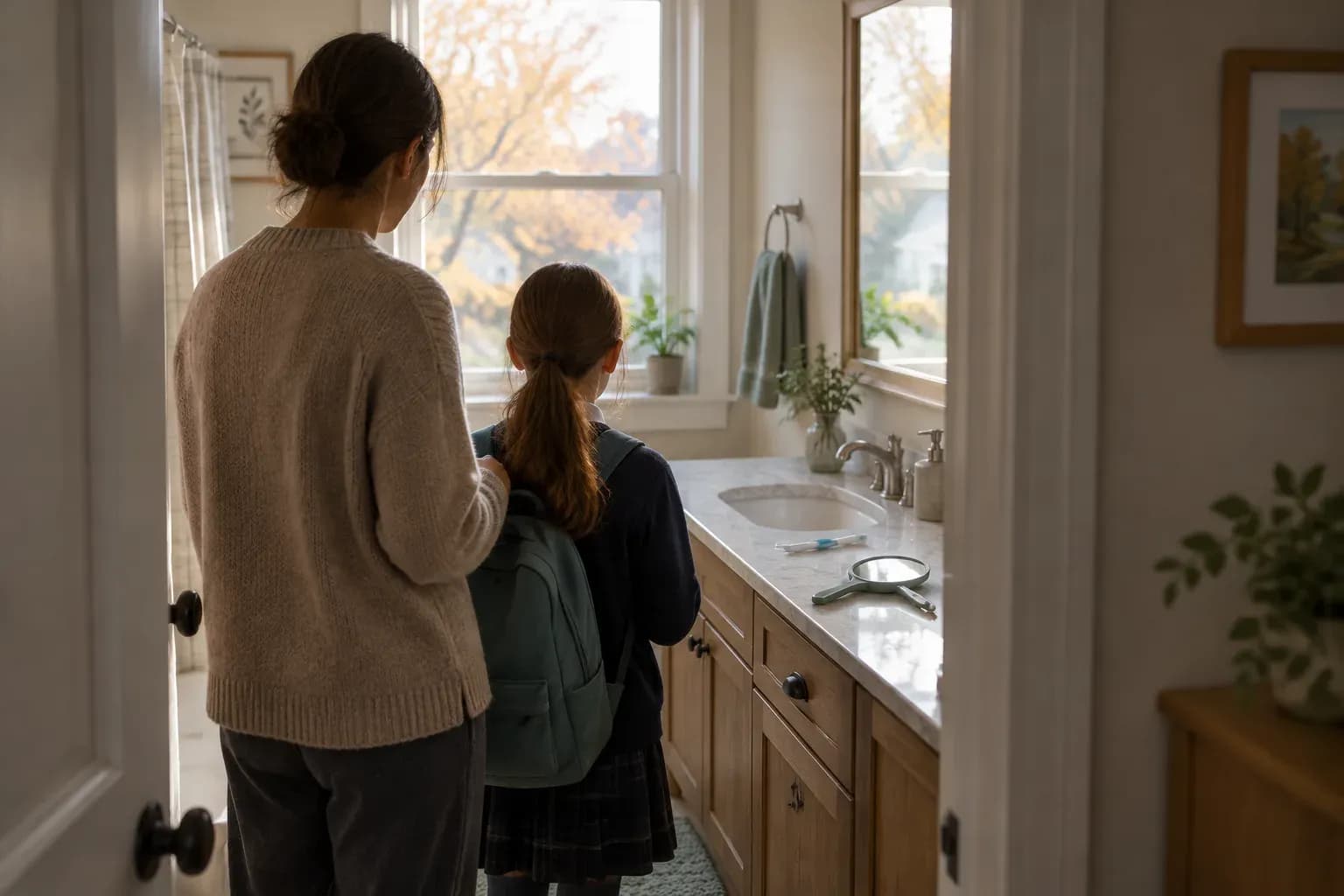
It helps to note when the family first noticed a change, and whether it keeps happening. Children do not always call a sensation pain: one starts chewing on the other side, another avoids brushing near the crown. A parent may notice plaque at the margin, a red gum, or bleeding on brushing. Pass those observations to the dentist in your own words. Do not try to decide from the look of the gum at home what has happened.
There is a limit to checks at home. Do not rock the crown with your fingers, lift its edge, or test the cement with an object. Without an examination you cannot reliably judge the fit of the margin or the areas that are hard to see. If the crown has clearly shifted, or there is pain or swelling, contact the dentist. Do not wait for the routine visit. Before a calm examination it is enough to write down what the parents noticed and what the child says.
At the visit the dentist looks at the position and the integrity of the crown, its margin, and the tissues around the tooth. Parents usually notice the part of the crown they can see in a smile or in conversation. That is not enough for an examination: the area at the gum needs attention too. A tidy appearance does not answer every question about the restored tooth. Asking “please look at whether the crown is all right” is reasonable even when there are no complaints.
If the gum is red or bleeds on brushing, do not explain it in advance with a single cause. The dentist will look for plaque nearby, at how the child cleans the area, and at what is visible at the margin of the crown. Ask to be shown the care for this tooth and the space next to it. Advice is more useful when it can be repeated at home, rather than remembered as “brush more carefully.” Also ask which changes in the gum should bring you back sooner.
Sometimes the conversation starts with “there is a metal crown” and moves straight to choosing another material. When you are looking at a crown that is already in place, the first questions are whether the child is comfortable, what the gum looks like, and whether the area can be cleaned. The material does not remove the need for care and follow-up. If the family is discussing the restoration of a different tooth, that is a separate clinical task. It should not be decided from the impression made by the current crown.
“Please check that it is holding firmly” often hides several worries at once. Something may be interfering with chewing. The area at the gum may be hard to clean. Food may be catching between the teeth. Describe each observation separately, without trying to diagnose it. The dentist will set the family's account next to the examination and explain whether anything further is needed. Testing the strength at home does not replace that conversation.
A crown restores one tooth, but the visit should not stop there. If food catches between the crown and the next tooth, show the dentist which space you mean. Do not guess the cause before the examination: the dentist will assess both teeth and talk about how to clean that place. This is especially useful when the child is complaining not about the crown, but about discomfort after eating.
The dentist will also look at the accessible surfaces of the neighboring primary and permanent teeth, and at plaque and visible changes in the enamel, the outer layer of the tooth. A parent may see that the crown is intact and miss the surface of the next tooth that faces it. Asking “please look at the teeth next to it as well” is specific enough. It stops the whole visit collapsing into one restoration.
At school age there is another subject for the conversation — the mixed dentition, when primary and permanent teeth are in the mouth at the same time. “A new tooth has come up next to it” does not, by itself, mean there is a problem, or that there is not. Ask the dentist to show you which tooth it is, and what the family should watch for. The dentist assesses position and eruption at the visit and, if needed, discusses a consultation with another specialist.
A radiograph is not ordered just because the child has a crown, or because it is autumn. The dentist decides on further imaging from the conversation and the examination, for this situation. If a new tooth or a complaint is worrying the parents, say so directly rather than choosing the investigation in advance. The dentist will explain what could be assessed at the visit, and whether anything needs clarifying.
At the end of the examination the family needs more than “everything is fine” or “something further is needed.” They need a clear plan for home. Ask what to watch for until the next visit. If plaque is hard to remove near the crown or between the teeth, ask to be shown the brushing technique on that area. A child and a parent follow advice more easily when they have seen it.
Agree the timing of the next examination with the pediatric dentist. It depends on what the dentist saw, and on the child's needs. There is no single “autumn schedule” for crowns. Ask which changes should bring you back before the booked date. Write the advice down while the details are still fresh.
For colleagues there is a simple order: first hear the everyday description, then say what was actually checked, and only then discuss what happens next. “It gets in the way of chewing” and “the gum is red” do not require the family to use the right medical terms. They give the examination a starting point. If the conversation later turns to restoring another tooth, the design and the material are discussed for that tooth, not from the state of the crown already in place.
Clinics that want information on the range of pediatric crowns for primary and permanent teeth can write to zaykovlab@yandex.ru. Before the visit it helps parents to write down what the child has noticed. The appointment can then move from general worry to specific questions.
There are contraindications. A consultation with a specialist is required.
 Expert materials
Treating the tooth and general anesthesia are separate decisions. What to prepare, and what to ask the dentist and the anesthesiologist before the procedure.
 Expert materials
Age, and the look of one crooked tooth, do not decide which brace system to use. What an orthodontist needs before a treatment plan and an order for appliances.