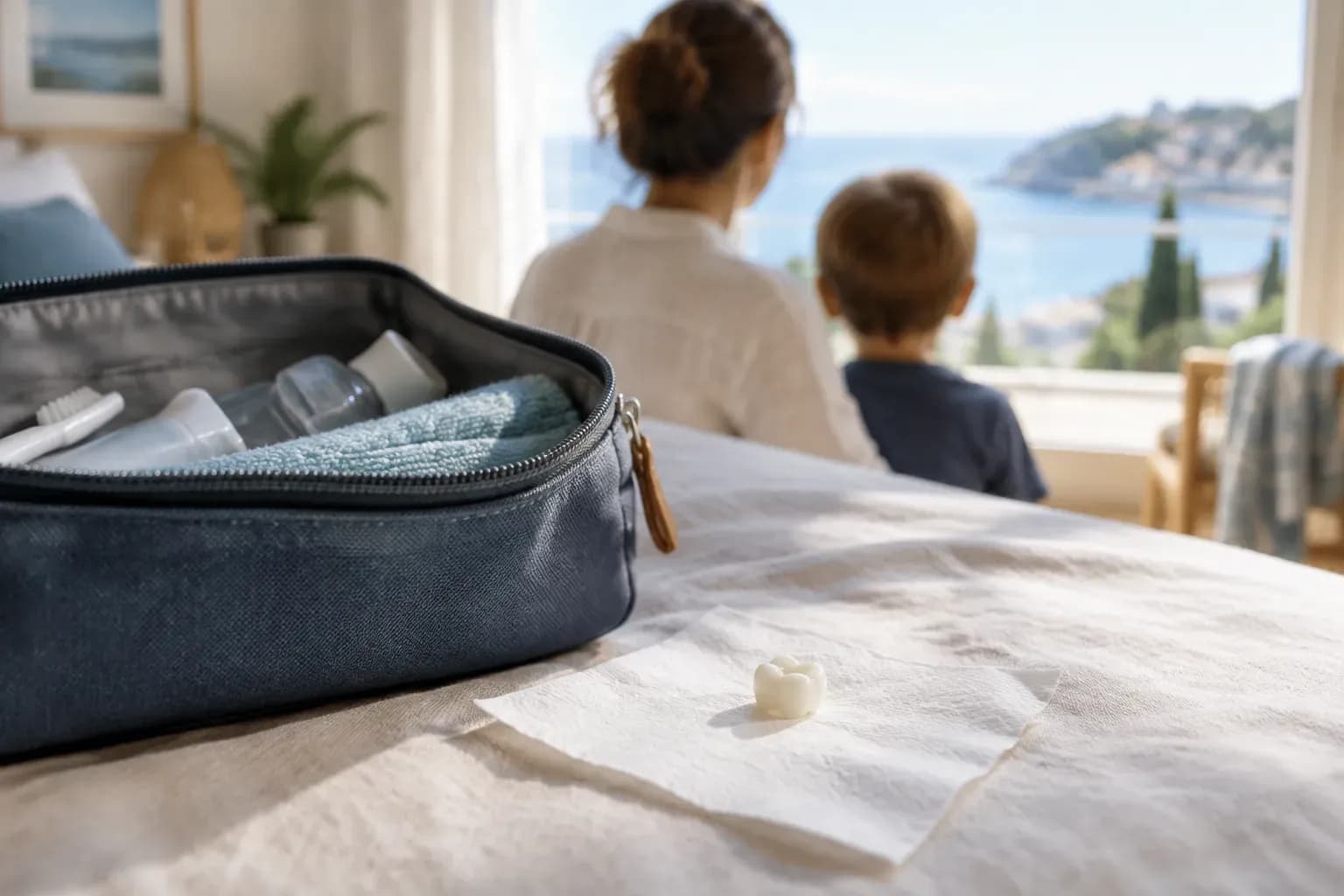
A crown has come off a primary tooth during the holidays. If the usual clinic is far away, it is tempting to put the crown back yourself. Do not. First check how the child is, take the crown out of the mouth, and contact a dentist.
A crown is a restoration that covers a tooth. When it separates, the tooth may still be in place. Another possibility: the primary tooth has been shed with the crown, as part of the natural change of teeth. Crowns on primary teeth can come off before the tooth is shed (Guy's and St Thomas' NHS Foundation Trust).
Parents do not need to decide from the look of what they found. If you have the crown, or the tooth with the crown, keep it and show it to the dentist. Do not try to put anything back without an examination.
Ask the child to stop eating or playing, and take the crown you found out of the mouth. Do not leave it in the cheek, and do not ask the child to hold it in the mouth until the appointment. Then find out what happened, and whether there are complaints.
A few questions matter:
Those details help the conversation with the dentist. Even if the child is not complaining, that alone does not mean an examination is unnecessary. Contact a dentist and ask when you should come in.
If breathing is difficult, there is a serious injury to the face, or heavy bleeding that will not stop, seek urgent medical care. Do not wait for a dental appointment (NHS).
Put it in a container that closes, and bring it to the appointment. It will not get lost among the luggage. The dentist will examine the child and assess the tooth and the crown. Whether the crown can be used again is not known in advance.
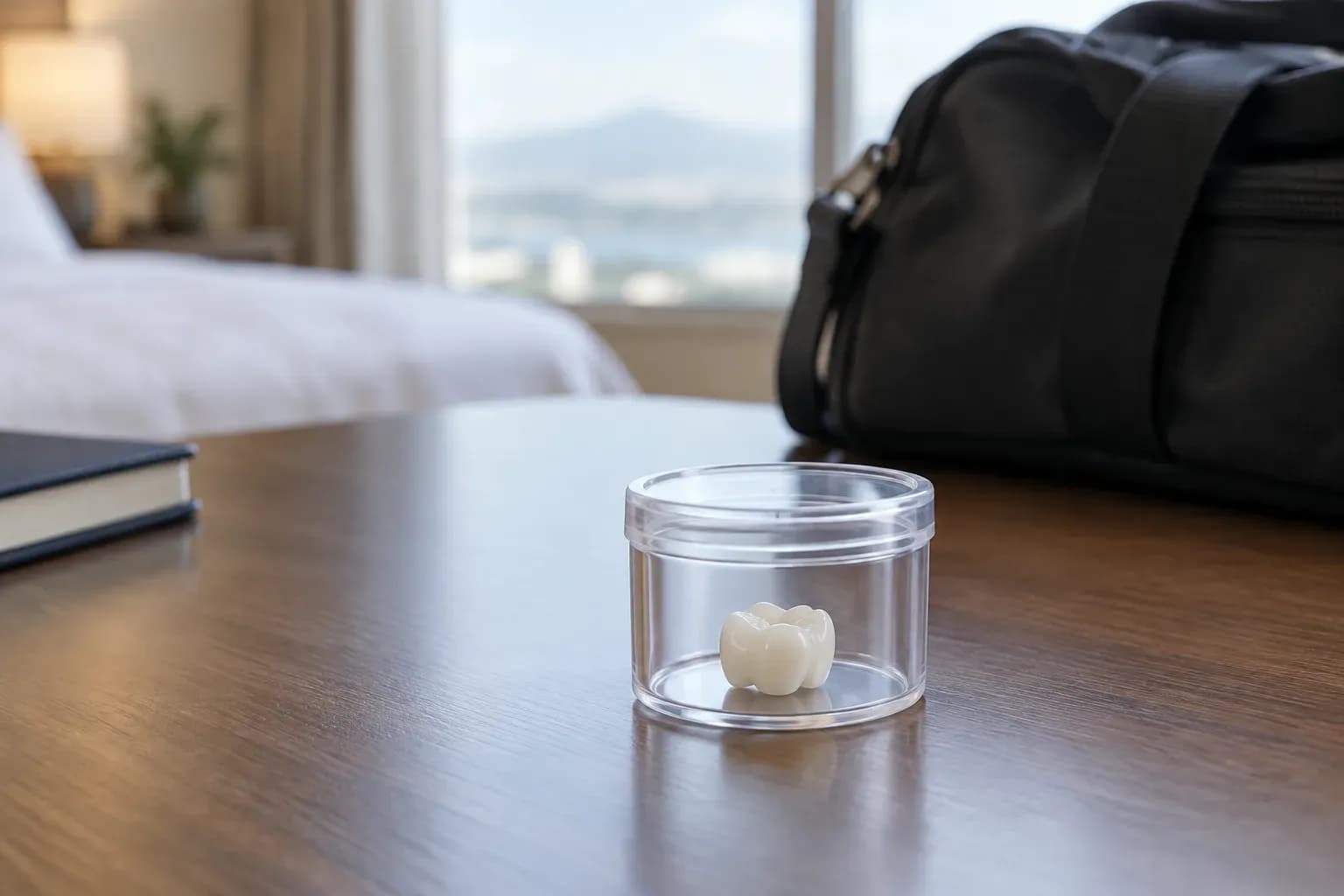
Do not seat the crown on the tooth yourself, and do not glue it with household glue. Even if it seems to fit, the next steps are decided after an examination. Do not ask the child to test whether the crown stays on the tooth.
If you could not find the crown, still contact a dentist. Say when you noticed it was gone, what had been happening before that, and how the child is. A missing crown is not a reason to put off calling the clinic.
If, after the crown disappeared, the child is coughing or having trouble breathing, do not wait for a dental appointment. Seek urgent medical care. The circumstances of the loss do not tell you where the crown went. A clinician has to assess the child.
If you can, call the pediatric dentist who usually sees the child. If you cannot reach them during the trip, go to a local dental clinic. Say that a crown has come off a primary tooth, and mention pain, swelling, bleeding, or an injury if there is any.
Ask when the child needs to be seen. Do not decide in advance that you can wait until the end of the holidays: the timing depends on circumstances the dentist will judge in the conversation. If new complaints appear before the visit, or the child changes, call again.
While you are waiting for advice, try not to load that tooth when the child chews. If ordinary food is uncomfortable, offer familiar soft food. Do not look for a material to hold the crown on temporarily, and do not try to test how tightly it seats.
On a trip it is easy to focus on the crown itself: whether it is intact, and whether it can be put back. The dentist also needs to assess the tooth that was under it. Until the examination, the parents' job is to keep what was found, watch how the child is, and arrange a consultation.
Contact a dentist urgently if the pain is severe or getting worse, the swelling is growing, or the crown came off after an injury to the tooth. Say when the symptoms started and how they are changing. The dentist can help decide the next steps and whether an urgent examination is needed (NHS).
Seek urgent medical care if the child is having trouble breathing, there has been a serious injury to the face, or heavy bleeding will not stop. Do not wait for the dental clinic to reply if the crown is missing and the child then starts coughing or has difficulty breathing.
If those signs are absent, still call a dentist, describe what happened, and agree when the child should be seen. Mention separately any symptoms that appeared after the crown came off.
Before the call or the visit, it helps to reconstruct the sequence. You do not need special terms. What you noticed is enough:
If you are not sure whether only the crown came out, or the tooth with it, say so. Bring what you found, in a container. After the examination the dentist will explain what is needed. Recementing or replacing the crown cannot be promised in advance.
No. Do not use household glue, and do not try to fix the crown yourself. Put it in a container and contact a dentist. The next steps are decided after an examination.
Check how the child is, and tell the dentist it is missing. Say when it happened and whether there are complaints. If the child starts coughing or has trouble breathing after the crown disappeared, seek urgent medical care.
Contact the treating dentist or a local clinic and ask when the child should be seen. It is important to say that there are no complaints. That does not replace a consultation. Do not plan to wait until the end of the trip without discussing it.
From the look of what you found, it can be hard for parents to tell. Keep it, do not put anything back, and show it to the dentist. They will assess it at the examination.
Severe or worsening pain, swelling that is growing, and an injury to the tooth are reasons to contact a dentist urgently. If breathing is difficult, there is a serious injury to the face, or heavy bleeding will not stop, seek urgent medical care.
There are contraindications. A consultation with a specialist is required.
 Expert materials
Treating the tooth and general anesthesia are separate decisions. What to prepare, and what to ask the dentist and the anesthesiologist before the procedure.
 Expert materials
Age, and the look of one crooked tooth, do not decide which brace system to use. What an orthodontist needs before a treatment plan and an order for appliances.