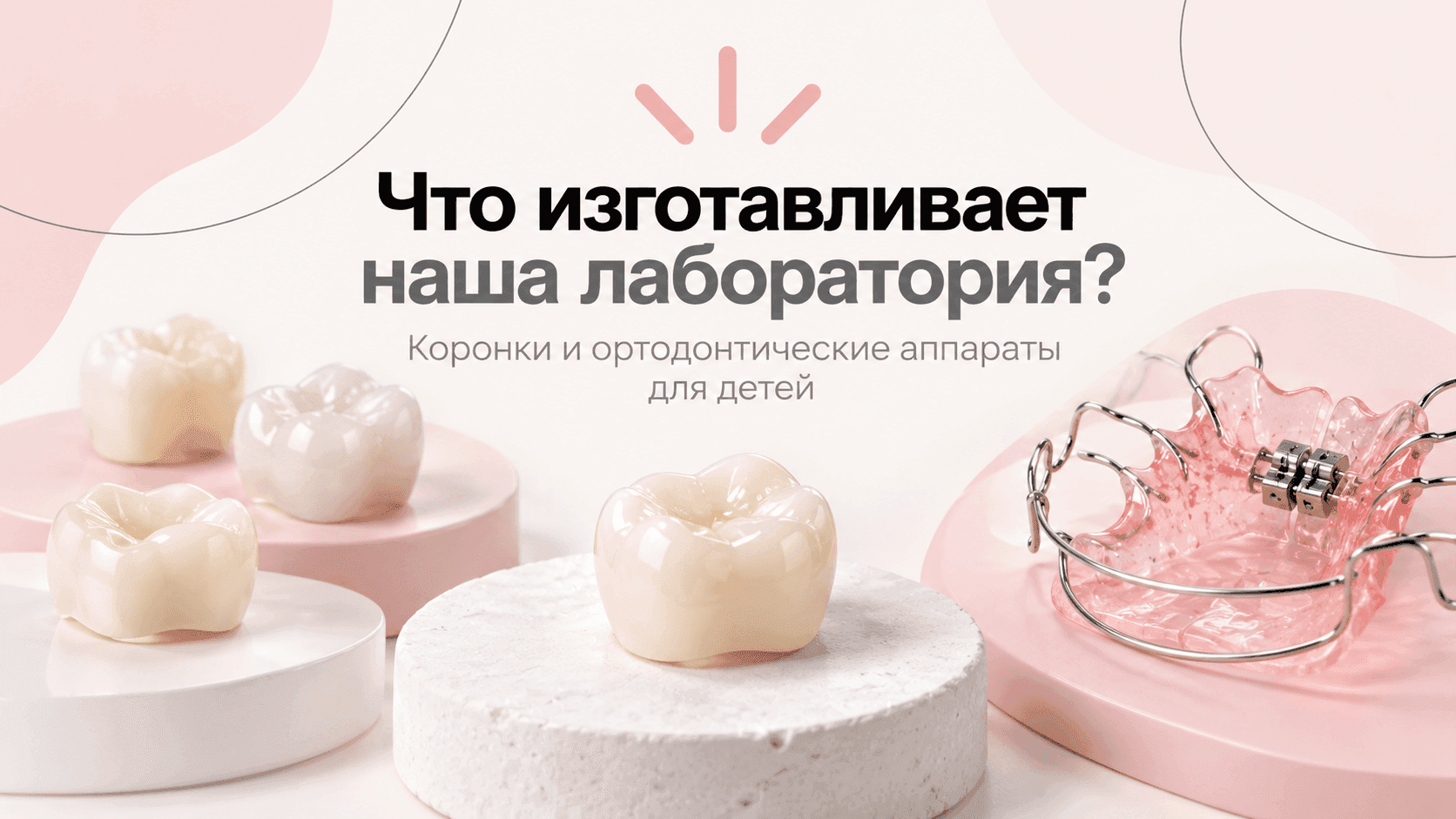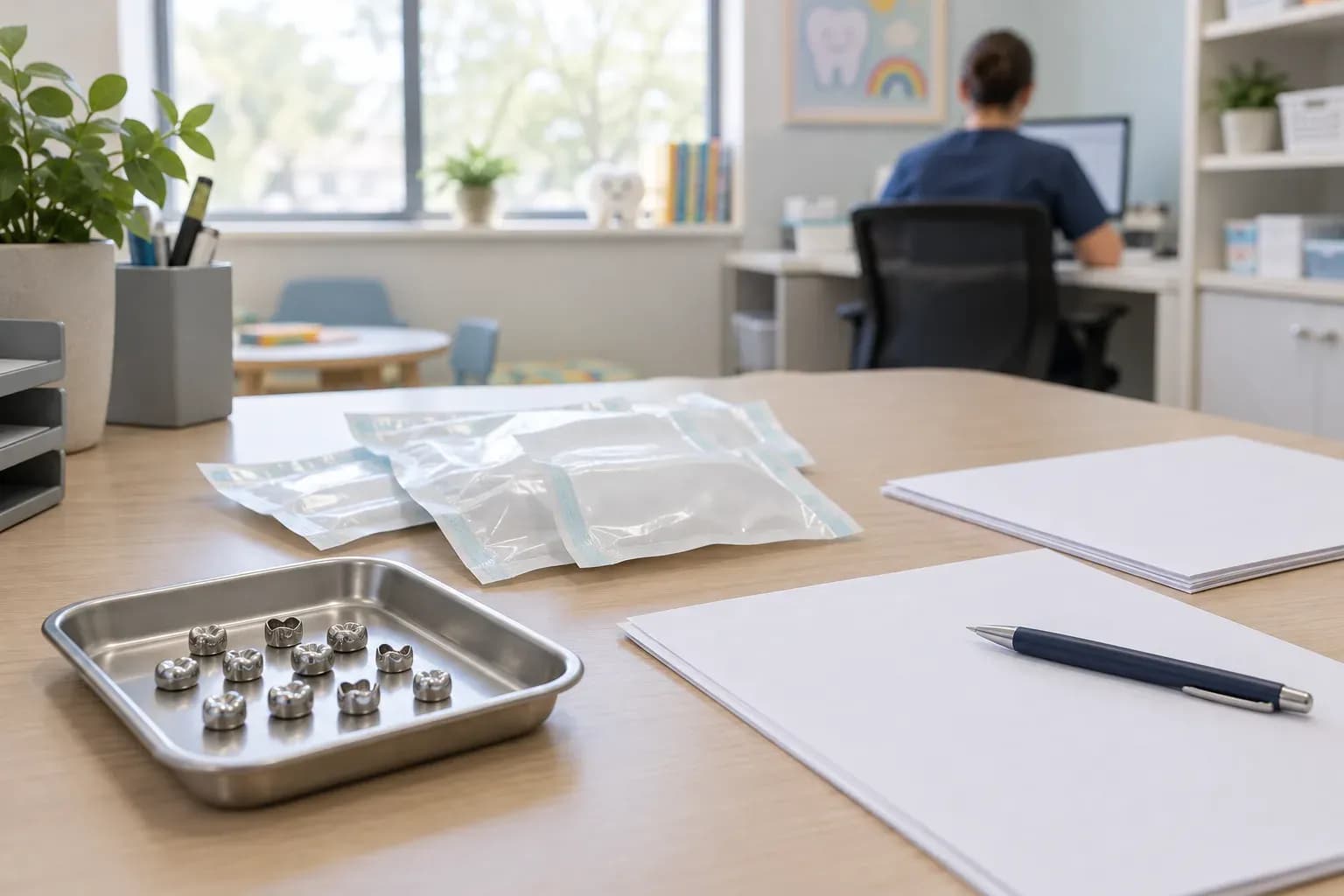
An order for pediatric crowns rarely fails because of the total quantity. More often the boxes are already in the surgery, and the size or the design you need is not among them. On paper the stock has been replenished. The dentist still has nothing to offer for the work that was planned. The usual cause is the order: the clinic bought an “assortment” without agreeing the contents with the people who see the patients.
A working order starts from what the dentists need, not from the name of a kit. Each line is tied to a group of teeth, a design, and a size in the manufacturer's notation. From that order a buyer can request the documents and place the purchase, and a senior nurse can check the delivery. The clinical decision stays with the dentist: a stock of crowns does not decide the treatment of a particular child.
First separate what you need for primary teeth from what you need for teenagers' permanent teeth. Then ask the dentists which groups they treat: anterior teeth, canines, molars; and, where it matters, the jaw and the side. Discuss material and quantity for each line, not for “pediatric crowns” as a whole. The patient's age, or the look of the product, will not tell a buyer which crown to include.
It helps to start from the work of the surgery, without turning past prescriptions into a universal rule. A need for crowns on primary anterior teeth does not cover a need for crowns on teenagers' permanent molars. And even if certain crowns are used regularly after treatment of primary teeth, that does not mean they are needed in every similar case. The dentist assesses a particular tooth. The buyer builds stock for an agreed profile of work.
A matrix is easiest as a table: one row, one design. The row records the type and material of the crown, whether it is for a primary or a permanent tooth, the group or the tooth position, the jaw and the side if those apply, the size, and the quantity planned. Write the size as the manufacturer marks it on the product you have chosen. If the dentists do not yet have enough information to choose, ask for the size chart first, and finish the order after that.
The same digit or letter in the names of different products does not prove that the sizes match. Check the documentation of the exact line the clinic intends to order. The dentist agrees the sizes and the designs. The buyer copies them into the specification without abbreviations such as “crowns for the front.” If a product is made separately for different teeth, jaws, or sides, those differences have to be visible in the order.
Kits are easy to get wrong because of a single number on the box. It shows how many units are inside. It does not say which sizes and designs those units are. Before you pay, ask for the breakdown: how many units of each item. If some sizes are used more often than others, ask whether they can be ordered on their own. Otherwise the kit stays incomplete for the very work it was bought for.
In the specification, leave a plain description of each line: type of crown, purpose, tooth or group, jaw and side where needed, size, pack, and quantity. A catalogue number is useful if the product has one. It should not replace that description. For a kit, attach the agreed list of contents. On delivery you can then check not only the number of boxes, but what is in each of them.
“The documents are there” is not enough to approve a purchase. Ask for the state registration of the medical device, the registration certificate, and the instructions or other instructions for use from the manufacturer. Match the name, the manufacturer, the intended use, and the designs with the quotation and the specification. A folder of documents for a supplier's whole range does not, by itself, confirm every line of the order.
The registration entry can be checked in the state register of Roszdravnadzor. Look not only at the number, but at the status of the entry, the name of the device, the manufacturer, and the information on designs. If the invoice and the documents use different names, do not decide on your own that they are the same product. Ask the supplier to explain the difference and to show the documents for the item you ordered, before you pay.
The dentist needs the instructions too: they are how the intended use and the limits of the device are checked. The buyer, in turn, checks that the instructions belong to the same item that is on the order. Our company holds registration certificates for pediatric zirconia, metal, biopolymer, and composite crowns. When you order, still ask for the documents on the items you have chosen. Different materials and designs are not interchangeable just because all of them are used in pediatric dentistry.
When the order arrives, open the specification before the crowns go into the surgeries. The person receiving the goods checks the number of packs, then the item marks, the sizes, and the number of units. If a kit was ordered, the guide is the breakdown agreed in advance, not only the total on the box. This is where you see whether the delivery matches what the dentist and the buyer agreed.
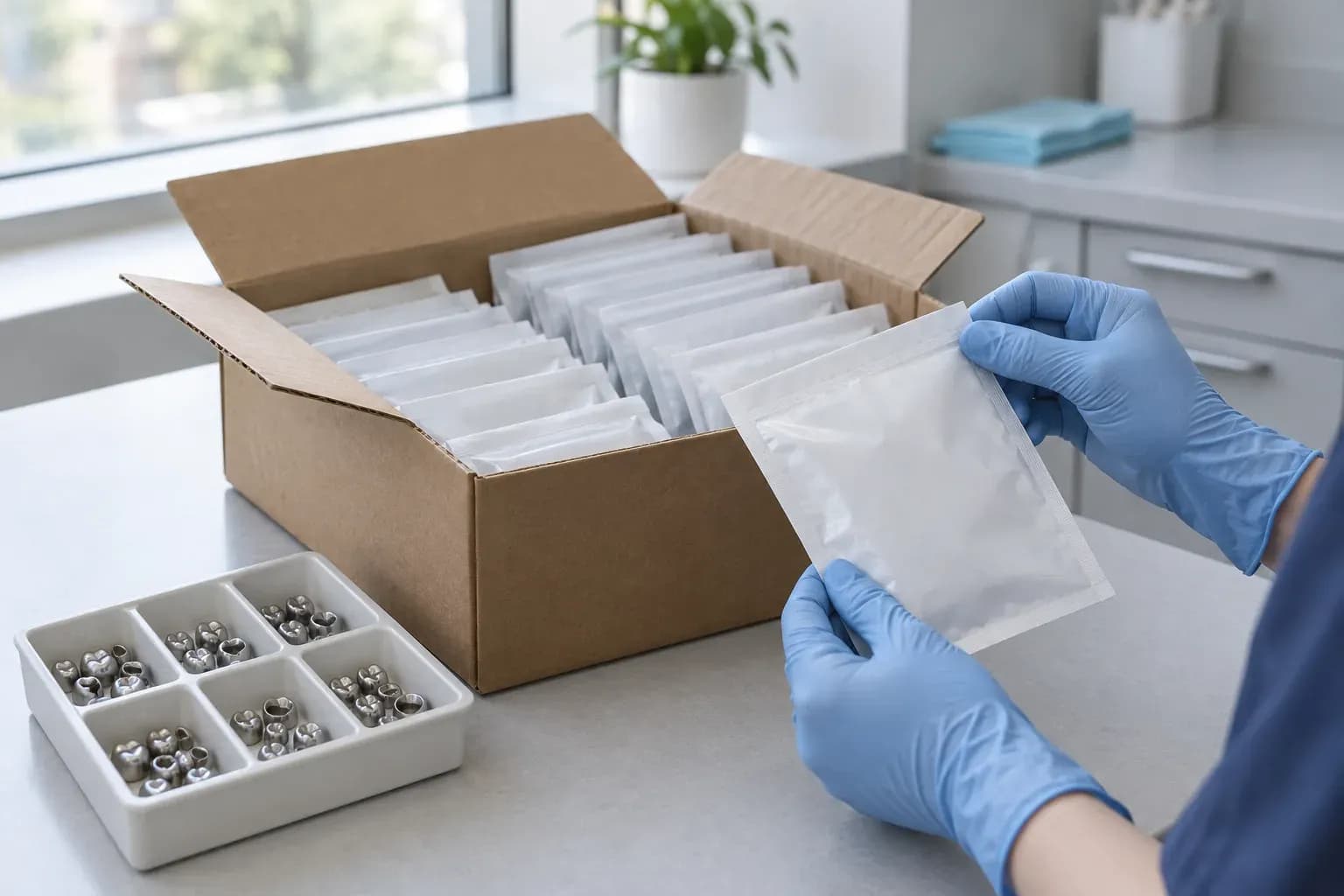
The next step is to set the labeling and the available identifiers next to the product documents. Labeling is checked for the specific product: the absence of a mark printed directly on a small crown does not, by itself, mean non-compliance. Inspect the pack, and check the storage conditions stated by the manufacturer. Take account of shelf life or sterility if they apply to this product. Do not copy the requirements of one product onto the whole range.
If the size, the design, or the quantity does not match, record the difference at goods-in and contact the supplier before the item goes into use. Do the same if the pack and the documents do not let you identify the contents with confidence. Do not distribute disputed items around the surgeries “while we find out”: it is then harder to reconstruct which line of the order each unit belonged to. After goods-in it helps to note actual use by size and design, so the next order is refined from the work of the clinic, not from memory.
Put the agreed items in one document and check that each line makes clear the purpose, the material, the tooth or group, the jaw and side where needed, the size, the pack, and the quantity. Mark which lines the dentist agreed, and which products still need registration details and instructions. If you are ordering a kit, attach its breakdown. The same document is useful when you discuss the order, when you pay, and when the goods arrive.
Our range includes pediatric zirconia, metal, biopolymer, and composite crowns. Specific sizes and the contents of a kit are better taken from your matrix, not guessed from a general material name. The company has worked since 2016. The warehouse and the production are in Novosibirsk. Crowns are in stock, shipment is the day after payment, and delivery to the regions takes 3 days.
Send the list of items you need, and a request for documents on those specific products, to zaykovlab@yandex.ru. If the matrix is not ready yet, describe the work of the clinic and ask for the size ranges and the kit contents, so the dentists can agree them. The order then contains what the clinic intends to keep in stock, not a random set of sizes.
There are contraindications. A consultation with a specialist is required.
 Products and solutions